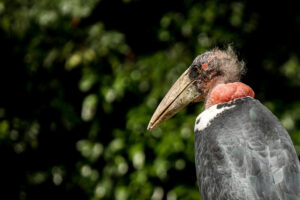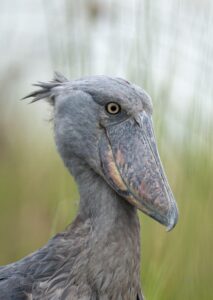
The great blue turaco uganda experience is one of the most memorable birding moments in Africa. As Africa’s largest turaco species, this spectacular bird commands attention with its brilliant blue, red, and green plumage, distinctive black crest, and raucous calls echoing through forest canopies. Found in Uganda’s premier forest destinations—Kibale, Bwindi, Semuliki, and the foothills of the Rwenzori Mountains—the Great Blue Turaco is both a target species for serious birders and a crowd-pleaser for casual observers. This comprehensive guide covers identification, habitat, behavior, and the best locations for observing this magnificent forest bird in the Pearl of Africa.
The Great Blue Turaco (Corythaeola cristata) is the largest member of the turaco family (Musophagidae), a group of birds endemic to Africa known for their vibrant colors and distinctive crests. Unlike many birds whose colors fade after death, turacos possess unique copper-based pigments that maintain their brilliant hues. The Great Blue Turaco’s impressive size—up to 75 cm (30 inches) in length—combined with its striking coloration makes it one of Uganda’s most unforgettable forest birds.
Scientific Classification:
Scientific Name: Corythaeola cristata
Family: Musophagidae (Turacos)
Order: Musophagiformes
Average Length: 70-75 cm (28-30 inches)
Average Weight: 800-1,200 grams (1.8-2.6 lbs)
Wingspan: 100-110 cm (39-43 inches)
Identifying the Great Blue Turaco is straightforward once you know its distinctive features.
Distinctive Characteristics:
Size: Africa’s largest turaco, approximately the size of a small turkey
Plumage: Predominantly gray-blue with a darker blue-gray back and wings
Crest: Prominent black-tipped crest that can be raised or lowered
Tail: Long, graduated tail with broad white tips on outer feathers
Underparts: Bright yellow-green belly and vent area
Bill: Bright red with a yellow tip; thick and robust
Eye: Red eye surrounded by bare red skin
Voice: Loud, raucous “kwah-kwah-kwah” calls that echo through the forest
Understanding the Great Blue Turaco’s habitat preferences is essential for successful sightings.
Primary Habitat:
Moist tropical forest, both lowland and montane
Forest edges and clearings
Secondary growth with large fruiting trees
Elevations from sea level to 2,500 meters
Particularly abundant in forests with fig trees and other fruiting species
Ugandan Distribution:
Kibale National Park: One of the most reliable locations for sightings
Bwindi Impenetrable Forest: Common in both Buhoma and Ruhija sectors
Semuliki National Park: Excellent sightings in lowland forest
Rwenzori Mountains National Park: Foothills and lower slopes
Mabira Forest: Accessible forest near Kampala
Budongo Forest: Reliable population in this Murchison Falls-adjacent forest
The Great Blue Turaco’s behavior is as impressive as its appearance.
Feeding Habits:
Primarily frugivorous, specializing in figs and wild fruits
Consumes large quantities of fruit, dispersing seeds throughout the forest
Will also eat flowers, leaves, and occasionally insects
Forages in the canopy and mid-canopy layers
Often seen perched prominently while digesting fruit
Social Behavior:
Typically seen singly, in pairs, or small family groups
Territorial during breeding season
Active throughout the day, particularly morning and late afternoon
Often perches conspicuously in open canopy areas
Call carries long distances and helps locate birds
Breeding:
Breeds during dry seasons
Builds flimsy platform nest of twigs in tree canopy
Clutch size 2 eggs
Both parents incubate and feed young
This great blue turaco uganda guide highlights the premier locations for sightings.
Kibale National Park:
Kibale offers exceptional Great Blue Turaco viewing. The forest’s tall canopy and abundant fruiting trees support a healthy population.
Viewing Tips:
Main trail and Kanyanchu River area
Early morning (7:00-9:00 AM) when birds are most active
Watch for birds flying between fruiting trees
The distinctive call often gives away their location
Bigodi Wetland Sanctuary edges are productive
Bwindi Impenetrable Forest:
Both Buhoma and Ruhija sectors host Great Blue Turaco. The waterfall trail in Buhoma is particularly productive.
Viewing Tips:
Forest edges and clearings
Early morning along main trails
Listen for the raucous calls
Watch for movement in canopy
Semuliki National Park:
The lowland forests of Semuliki offer excellent viewing opportunities with less crowding.
Viewing Tips:
The main track through the forest
Early morning drives
Fruiting trees near park headquarters
To maximize your chances of seeing this magnificent species:
Start early—birds are most active in the first two hours after dawn
Listen for the call—the loud “kwah-kwah-kwah” carries long distances through the forest
Watch fruiting trees—fig trees and other fruiting species attract turacos
Scan canopy perches—Great Blue Turacos often sit conspicuously after feeding
Be patient—birds may remain in one area for extended periods while digesting
Visit during dry season—December-February and June-August offer best viewing conditions
Work with local guides—they know productive fruiting trees and recent sightings
The Great Blue Turaco is classified as Least Concern on the IUCN Red List, with a wide distribution across central and eastern Africa. However, habitat loss remains a concern.
Threats:
Forest fragmentation from agricultural expansion
Hunting for food and feathers in some regions
Habitat degradation from logging
Conservation Efforts:
Protected areas across Uganda provide core habitat
Forest conservation programs in key regions
Sustainable tourism supports habitat protection
Population Trends:
Populations are stable within protected areas but declining in unprotected forests. Uganda’s extensive protected area network provides essential habitat security.
Capturing the Great Blue Turaco requires preparation for canopy-level photography.
Recommended Equipment:
400-600mm telephoto lens for canopy subjects
100-400mm zoom for birds that descend to mid-canopy
Fast lens for forest lighting conditions
Monopod for stability while walking
Lens hood to manage dappled light
Photography Techniques:
Shoot in aperture priority with wide aperture for subject isolation
Use exposure compensation for backlit canopy subjects
Focus on the eye and distinctive crest
Wait for birds to perch in clearings for best backgrounds
Be ready for flight shots as birds move between trees
Include habitat context for environmental portraits
What is the best time of day to see Great Blue Turaco?
Early morning (7:00-9:00 AM) and late afternoon (4:00-6:00 PM) are most productive when birds are active and calling.
Where is the most reliable location in Uganda?
Kibale National Park offers the most consistent sightings, followed closely by Bwindi and Semuliki.
What does the Great Blue Turaco eat?
They primarily eat figs and other wild fruits, playing an important role in forest regeneration through seed dispersal.
How can I identify Great Blue Turaco?
Look for a large, gray-blue bird with a prominent black-tipped crest, red bill, and bright yellow-green belly.
Is Great Blue Turaco common in Uganda?
Yes, it is relatively common in suitable forest habitats across Uganda’s protected areas, making it one of the more reliable forest bird sightings.
The great blue turaco uganda experience is a highlight of any forest birding safari. As Africa’s largest turaco, with its spectacular plumage, distinctive crest, and raucous calls, this species captivates birders and nature enthusiasts alike. Kibale National Park, Bwindi Impenetrable Forest, and Semuliki offer exceptional viewing opportunities, particularly during early morning sessions when birds are most active. Whether you target this species during the 4-Day Kibale Forest Birding Tour or encounter it while exploring Bwindi’s forest trails, the Great Blue Turaco never fails to impress. Plan your visit during dry seasons, work with experienced guides, and prepare to be awed by one of Africa’s most magnificent forest birds.
Join our expert-guided birding safaris and tick this magnificent species off your life list.