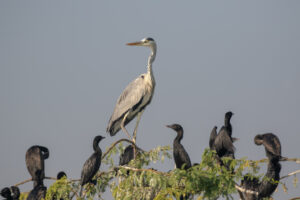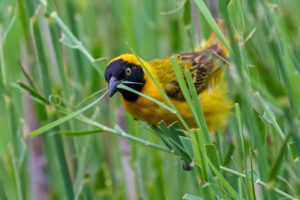
Murchison falls national park birds represent one of Uganda’s most diverse avian assemblages, with over 450 species recorded across savannah, riverine, woodland, and wetland habitats. As Uganda’s largest national park, Murchison Falls protects 3,893 square kilometers of pristine wilderness centered on the dramatic Nile River, where the world’s longest river explodes through a narrow 7-meter gorge. The park’s combination of habitats—from the Delta’s papyrus swamps to the northern bank’s open savannah—supports an extraordinary range of species including Shoebill, Goliath Heron, Abyssinian Ground Hornbill, and the iconic African Fish Eagle. This comprehensive guide covers the park’s birding highlights, best locations, and essential planning information.
Murchison Falls National Park is Uganda’s largest and oldest protected area, established in 1952. The park straddles the Nile River, which divides it into the northern bank (savannah-dominated) and southern bank (woodland-dominated). The park’s centerpiece is Murchison Falls, where the Nile compresses through a 7-meter gap before plunging 43 meters. The park’s diverse habitats include savannah grasslands, acacia woodland, riverine forest, papyrus swamps, and the Nile River itself.
Key Features:
Uganda’s largest national park (3,893 km²)
Over 450 bird species recorded
The dramatic Murchison Falls
Nile River Delta for Shoebill viewing
Savannah, woodland, and wetland habitats
Boat cruises to the falls and Delta
Habitat Types:
Open savannah grasslands
Acacia and Combretum woodland
Riverine forest along the Nile
Papyrus swamps in the Delta
Nile River and tributaries
Murchison falls national park birds include some of Uganda’s most spectacular and sought-after species.
Shoebill and Waterbirds:
Shoebill: Delta area and papyrus swamps; best viewed on morning Delta boat cruise
Goliath Heron: Riverbanks and Delta channels; world’s largest heron
Saddle-billed Stork: Riverine areas and open water
African Fish Eagle: Common along the Nile River
African Skimmer: Delta area during dry season
Pink-backed Pelican: Nile River and Delta channels
Savannah and Raptor Species:
Abyssinian Ground Hornbill: Northern bank grasslands
Secretary Bird: Open savannah areas on northern bank
Martial Eagle: Woodland and savannah edges
Bateleur: Soaring over savannah
Steppe Eagle: Present during migration season (November-March)
Pallid Harrier: Grasslands on northern bank
Forest and Woodland Species:
Denham’s Bustard: Northern bank grasslands
Standard-winged Nightjar: Woodland edges (nocturnal)
Black-bellied Bustard: Savannah and woodland
Swallow-tailed Bee-eater: Woodland edges
Red-throated Bee-eater: Riverbanks
Delta Area (Shoebill and Waterbirds):
The Nile River Delta at the northern end of the park offers the most reliable Shoebill viewing in Murchison Falls. Morning boat cruises navigate papyrus channels where Shoebill regularly feed.
Viewing Tips:
Morning boat cruise (7:00-10:00 AM) offers best light
Focus on papyrus edges and channels
Combine with waterbird photography
Goliath Heron and Saddle-billed Stork common
Northern Bank Savannah:
The open savannah on the north side of the Nile offers excellent viewing of Abyssinian Ground Hornbill, Secretary Bird, and numerous raptors.
Viewing Tips:
Early morning and late afternoon game drives
Watch for ground hornbills in open grasslands
Look for Secretary Bird walking through short grass
Termite mounds attract raptors
Paraa Area (Riverine and Woodland):
The area around the Paraa ferry crossing offers riverine forest and woodland habitats with good bird diversity.
Viewing Tips:
Forest edge near the ferry for woodland species
Riverbanks for waterbirds
Combine with northern bank and Delta visits
Good for bee-eaters and kingfishers
Top of the Falls:
The area immediately above and below the falls offers unique opportunities for species associated with the gorge.
Viewing Tips:
Rock Pratincole on rocks near the falls
African Black Swift feeding over the gorge
Red-throated Bee-eater on riverbanks
Combine with waterfall photography
Access Steps to Murchison Falls National Park:
Fly to Entebbe International Airport (EBB) as your arrival point
Drive from Kampala to the park (approximately 5-6 hours via Masindi)
Take a domestic charter flight from Entebbe to Pakuba or Bugungu airstrip
Enter the park through the main gate at Kichumbanyobo (from Masindi)
Arrange game drives and boat cruises through your lodge or the park headquarters
Accommodation Options:
Nile Safari Lodge: Luxury overlooking the Nile River
Pakuba Safari Lodge: Mid-range on the northern bank
Paraa Safari Lodge: Located near the ferry crossing
Murchison River Lodge: Mid-range with river views
Red Chilli Rest Camp: Budget camping and bandas
December to February (Long Dry Season):
This period offers the driest conditions with clear skies and excellent visibility. Water levels are lower, concentrating Shoebill in the Delta. This is the optimal period for birding and photography.
June to August (Short Dry Season):
Good conditions with slightly cooler temperatures. Shoebill viewing remains reliable. Savannah birding is excellent as wildlife concentrates around water sources.
March to May and September to November (Rainy Seasons):
Birding is possible but trails may be muddy. The Delta boat cruise remains operational. Lush landscapes and breeding plumage for many species. Lower tourist numbers offer exclusive experiences.
Best Time of Day:
Early morning (6:30-9:00 AM) for Delta boat cruise. Late afternoon (4:00-6:30 PM) for northern bank game drives.
What is the best time of year for Shoebill viewing in Murchison Falls?
December-February offers the best conditions with lower water levels concentrating birds in the Delta.
Can I see Abyssinian Ground Hornbill in Murchison Falls?
Yes, the northern bank savannah is reliable for Abyssinian Ground Hornbill, particularly in the early morning.
Do I need a 4×4 vehicle for the park?
Yes, a 4×4 vehicle is essential, especially during rainy seasons and for accessing the northern bank.
How long should I spend birding in Murchison Falls?
A minimum of 2 nights (1.5 days) is recommended. For comprehensive coverage of all habitats, 3-4 nights is ideal.
What is the best boat cruise for birding?
The Delta boat cruise offers the best Shoebill viewing. The falls boat cruise is better for waterbirds and the spectacular falls backdrop.
Murchison falls national park birds offer one of Uganda’s most diverse and rewarding birding experiences. From the prehistoric Shoebill in the Delta to the majestic Abyssinian Ground Hornbill striding across the northern bank, the park’s 450+ species represent the best of Uganda’s savannah and wetland birding. Whether you explore the Nile by boat, drive the northern bank for raptors, or search for forest species in the woodland, Murchison Falls delivers exceptional birding. Plan your visit during dry seasons, prioritize early morning boat cruises, and prepare to be awed by the spectacular falls as well as the birds.