Kibale national park birds represent one of Africa’s most diverse forest bird communities, with 375 recorded species including the legendary Green-breasted Pitta, six hornbill species, and numerous forest specials. Located in western Uganda, Kibale protects 795 square kilometers of tropical rainforest, making it the country’s premier destination for forest birding. The park’s well-maintained trail network, experienced guides, and the adjacent Bigodi Wetland Sanctuary create a complete forest birding experience. Beyond birds, Kibale is famous for its 13 primate species, including chimpanzees, allowing birders to combine exceptional forest birding with primate tracking. This comprehensive guide covers the park’s bird highlights, best locations, and essential planning information.
Kibale National Park is located in western Uganda, approximately 350 kilometers from Kampala. The park protects 795 square kilometers of tropical rainforest, ranging in elevation from 1,100 to 1,600 meters. The forest is characterized by tall canopy trees, dense understory, and numerous small streams and swamps. Kibale’s bird diversity is among the highest of any forest in Africa, with 375 recorded species including the famous Green-breasted Pitta.
Key Features:
375 bird species recorded
13 primate species including chimpanzees
795 square kilometers of tropical forest
The legendary Green-breasted Pitta
Six hornbill species
Bigodi Wetland Sanctuary adjacent
Habitat Types:
Tropical rainforest canopy
Forest understory and edges
Swamp and wetland areas (Bigodi)
Secondary forest
Crater lakes on forest edges
Kibale national park birds include some of Africa’s most spectacular and sought-after forest species.
Forest Specials:
Green-breasted Pitta: The legendary forest jewel; emerges on trails after rains
Great Blue Turaco: Africa’s largest turaco; common in forest canopy
Black-billed Turaco: Forest edges and canopy
White-naped Pigeon: Forest canopy; Albertine Rift endemic
Hornbills (6 species):
Black-casqued Hornbill: Large, distinctive call
Piping Hornbill: Common in forest canopy
African Grey Hornbill: Forest edges
Crowned Hornbill: Mid-canopy forager
Pale-billed Hornbill: Less common
White-thighed Hornbill: Forest interior
Other Notable Species:
African Grey Parrot: Flocks in forest canopy
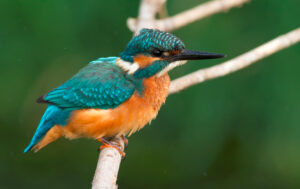
Blue-breasted Kingfisher: Forest streams
Yellow-billed Barbet: Common in forest edges
Joyful Greenbul: Forest understory
Purple-headed Starling: Canopy flocks
Forest flycatchers and sunbirds
Bigodi Wetland Sanctuary (adjacent):
Great Blue Turaco: Common at sanctuary edges
Papyrus Gonolek: Papyrus areas
White-spotted Flufftail: Wetland edges
Blue-breasted Kingfisher: Streams
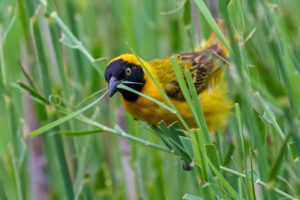
Northern Brown-throated Weaver: Common
Kanyanchu Main Trail:
The main trail from the park headquarters at Kanyanchu is the most productive area for forest birding, particularly for the Green-breasted Pitta.
Viewing Tips:
Start early (7:00-8:00 AM) for most active birds
Focus on trail edges where Pitta emerges after rains
Watch mixed-species flocks for warblers and flycatchers
Listen for the distinctive Pitta call
Work with experienced guides who know territories
Bigodi Wetland Sanctuary:
Located just outside the park, Bigodi offers boardwalk trails through wetland and forest edge habitats, productive for waterbirds and edge species.
Viewing Tips:
Early morning (7:00-9:00 AM) for most active birds
Great Blue Turaco common on sanctuary edges
Papyrus Gonolek in papyrus areas
Boardwalk offers easy walking
Community-managed sanctuary supports local conservation
Sebitoli Area (Northern Kibale):
The northern sector of the park is less visited but offers good forest birding with fewer tourists.
Viewing Tips:
Early morning forest walks
Good for hornbill species
Less crowded than Kanyanchu
Combine with chimpanzee tracking
Access Steps to Kibale National Park:
Fly to Entebbe International Airport (EBB) as your arrival point
Drive from Kampala to Kibale (approximately 5-6 hours via Fort Portal)
Take a domestic charter flight from Entebbe to Fort Portal or Kasese airstrip
Enter the park through the main gate at Kanyanchu (near the town of Kibale)
Arrange birding walks and chimpanzee tracking through your lodge or the park headquarters
Accommodation Options:
Kyaninga Lodge: Luxury overlooking a crater lake
Kibale Forest Camp: Mid-range adjacent to park boundary
Primate Lodge Kibale: Within the forest itself
Chimpanzee Forest Guesthouse: Budget-friendly near park
Turaco Treetops Lodge: Mid-range with forest views
December to February (Long Dry Season):
This period offers the driest forest trails and best conditions for Green-breasted Pitta viewing. The Pitta is most active after rains, but dry trails allow deeper forest access. This is the optimal period for most birders.
June to August (Short Dry Season):
Good conditions with slightly cooler temperatures. The forest is lush, and resident birds are often in breeding plumage. Trails are generally accessible, though occasional light rains occur.
March to May and September to November (Rainy Seasons):
Birding is possible but trails become muddy. The Green-breasted Pitta is often more active after rains, making sightings potentially easier. However, trail conditions can be challenging.
Best Time of Day:
Early morning (7:00-9:00 AM) for most active forest birds. The Green-breasted Pitta can be seen throughout the day after rain events.
What is the best time to see Green-breasted Pitta in Kibale?
The Green-breasted Pitta is most likely to be seen after rains when it emerges onto trails to feed. The dry seasons (December-February, June-August) offer the best trail conditions.
How many hornbill species can I see in Kibale?
Six hornbill species occur in Kibale, including Black-casqued, Piping, African Grey, Crowned, Pale-billed, and White-thighed.
Can I combine chimpanzee tracking with birding?
Yes, chimpanzee tracking is a popular activity. Morning tracking sessions (8:00 AM) allow afternoon birding. Book permits in advance ($250 per person).
Do I need a guide for birding in Kibale?
A guide is required for forest walks. Experienced bird guides know Green-breasted Pitta territories and can locate forest species efficiently.
What is the