Kidepo valley national park birds include Somali-Masai biome species found nowhere else in Uganda, making this remote park an essential destination for serious birders seeking a complete East African bird list. Located in the country’s northeastern corner on the borders of South Sudan and Kenya, Kidepo protects 1,442 square kilometers of semi-arid savannah, rocky outcrops, and dry riverbeds.
The park’s bird list exceeds 475 species, including Ostriches, Kori Bustards, and other dry-country specials that are absent from Uganda’s other protected areas. This comprehensive guide covers the park’s unique birds, best locations, and essential planning information.
Overview of Kidepo Valley National Park
Kidepo Valley National Park is Uganda’s most remote protected area, located approximately 700 kilometers from Kampala in the Karamoja region. The park protects 1,442 square kilometers of semi-arid savannah, with the Narus Valley in the south and the Kidepo Valley in the north. The park’s location in the Somali-Masai biome means it hosts species found nowhere else in Uganda, including Ostriches, Kori Bustards, and several raptors and arid-adapted species.
Key Features:
-
1,442 square kilometers of protected area
-
Over 475 bird species recorded
-
Somali-Masai biome species found nowhere else in Uganda
-
Ostriches and Kori Bustards
-
Remote, less-visited park
-
Spectacular mountain scenery
Habitat Types:
Bird Species Found in Kidepo
Kidepo valley national park birds include Somali-Masai biome species that are rare or absent elsewhere in Uganda.
Somali-Masai Specials:
-
Ostrich: The only wild population in Uganda
-
Kori Bustard: Africa’s largest flying bird; common in open grasslands
-
Secretary Bird: Open savannah areas
-
Chestnut-bellied Sandgrouse: Dry riverbeds
-
Yellow-necked Spurfowl: Acacia woodland
-
White-bellied Go-away-bird: Acacia and dry woodland
-
Vulturine Guineafowl: Open savannah and woodland edges
-
Pygmy Falcon: Small raptor; acacia woodland
Raptors and Large Birds:
-
Martial Eagle: Savannah and woodland
-
Bateleur: Soaring over open areas
-
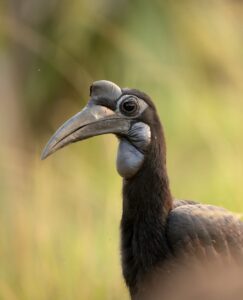
Abyssinian Ground Hornbill: Open grasslands
-
Verreaux’s Eagle: Rocky outcrops
-
Pallid Harrier: Grasslands during migration
Other Notable Species:
-
Crimson-rumped Waxbill: Dry grassland
-
Golden-breasted Bunting: Acacia woodland
-
Jackson’s Hornbill: Dry woodland
-
Black-faced Sandgrouse: Dry riverbeds
Best Viewing Locations
Narus Valley:
The Narus Valley in the southern sector of the park is the most productive area for birding, with open grasslands, seasonal wetlands, and acacia woodland.
Viewing Tips:
-
Early morning (7:00-9:00 AM) for most active birds
-
Look for Ostriches in open grasslands
-
Kori Bustard in short grass areas
-
Secretary Bird walking through savannah
-
Waterbirds at seasonal wetlands
Kidepo Valley (Northern Sector):
The drier Kidepo Valley and riverbed offer species adapted to arid conditions, including sandgrouse and dry-country specials.
Viewing Tips:
-
Early morning for sandgrouse at water sources
-
Dry riverbed for arid-adapted species
-
Combine with the Narus Valley for comprehensive coverage
-
More remote, requires longer drives
Apoka Area (Park Headquarters):
The area around the park headquarters offers accessible birding with good road access and accommodation nearby.
Viewing Tips:
-
Start early from the lodge
-
Acacia woodland around Apoka
-
Rocky outcrops for Verreaux’s Eagle
-
Combine with game drives
Access and Accommodation
Access Steps to Kidepo Valley National Park:
-
Fly to Entebbe International Airport (EBB) as your arrival point
-
Drive from Kampala to Kidepo (approximately 10-12 hours via Gulu or Moroto)
-
Take a domestic charter flight from Entebbe to Kidepo airstrip (2 hours)
-
Enter the park through the main gate near the Apoka headquarters
-
Arrange game drives through your lodge or the park headquarters
Accommodation Options:
-
Apoka Safari Lodge: Luxury within the park
-
Kidepo Savannah Lodge: Mid-range near the park
-
Kidepo River Lodge: Mid-range in the Kidepo Valley
-
Narus Valley Campsite: Budget camping
-
Apoka Rest Camp: Budget bandas
Best Time to Visit Kidepo
December to February (Long Dry Season):
This period offers the driest conditions with wildlife concentrated around remaining water sources. This is the optimal period for birding, especially for sandgrouse at waterholes.
June to August (Short Dry Season):
Good conditions with slightly cooler temperatures. Birding is excellent, and the park is less dusty than in the long dry season.
March to May and September to November (Rainy Seasons):
Birding is possible but roads may become impassable. The park may be inaccessible during heavy rains. The landscape is lush, and birds are in breeding plumage.
Best Time of Day:
Early morning (7:00-9:00 AM) for most active birds. Late afternoon (4:00-6:30 PM) for game drives.
Frequently Asked Questions
How many Somali-Masai specials can I see in Kidepo?
With 2-3 days of birding, you can expect to see 15-20 of the Somali-Masai species found nowhere else in Uganda.
What is the most sought-after bird in Kidepo?
The Ostrich (Uganda’s only wild population) and Kori Bustard are top targets. Vulturine Guineafowl and Pygmy Falcon are also highly sought.
Do I need a 4×4 vehicle for Kidepo?
Yes, a 4×4 vehicle is essential for Kidepo, especially for reaching the Kidepo Valley and during rainy seasons.
How many days should I spend birding in Kidepo?
A minimum of 3 nights (2 full days) is recommended. For comprehensive coverage, 4-5 nights allows time to explore both the Narus and Kidepo Valleys.
Is Kidepo worth the long journey?
For serious birders seeking a complete Uganda bird list, Kidepo is essential. The Somali-Masai specials found nowhere else in the country make the journey worthwhile.
Conclusion
Kidepo valley national park birds include Somali-Masai biome species found nowhere else in Uganda, making this remote park an essential destination for serious birders. Ostriches, Kori Bustards, Vulturine Guineafowl, and Pygmy Falcons are among the specials that reward those who make the long journey to Uganda’s northeastern corner. The Narus Valley offers the most productive birding, with open grasslands, seasonal wetlands, and acacia woodland. Though remote, Kidepo’s unique bird community and spectacular scenery make it a must-visit for any birder seeking a complete Uganda bird list. Plan your visit during dry seasons, ensure you have a 4×4 vehicle, and prepare to discover the unique birds of Uganda’s far northeast.