Rwenzori mountains bird watching targets Albertine Rift endemics, montane forest specialists, and unique high-altitude species found only in this legendary mountain range. The Rwenzori Mountains—also known as the Mountains of the Moon—straddle the Uganda-Democratic Republic of Congo border, rising to 5,109 meters at Margherita Peak. The range’s elevation gradient from 1,500 to over 4,000 meters creates distinct habitat zones: montane forest, bamboo zone, heath zone, and alpine moorland. Each zone hosts specialized bird species, with the legendary Rwenzori Turaco being the star attraction. This comprehensive guide covers the mountain’s unique birds, best viewing locations, and essential planning information.
The Rwenzori Mountains are a UNESCO World Heritage site and one of Africa’s most spectacular mountain ranges. Unlike most East African mountains, the Rwenzoris are not volcanic but are a block of rock uplifted by tectonic forces, creating dramatic peaks, glaciers, and valleys. The range’s isolation and elevation gradient have produced remarkable endemism, with several bird species and subspecies found nowhere else.
Key Features:
UNESCO World Heritage status
Elevations from 1,500 to 5,109 meters
Multiple habitat zones from forest to alpine
Rwenzori Turaco endemic to the range
Several Albertine Rift endemics
Stunning mountain scenery
Habitat Zones:
Montane forest (1,500-2,400 meters)
Bamboo zone (2,400-2,800 meters)
Heath and tree heath zone (2,800-3,600 meters)
Alpine moorland (above 3,600 meters)
Rwenzori mountains bird watching targets species adapted to this unique mountain environment.
Rwenzori Specials:
Rwenzori Turaco: Spectacular green, blue, and red plumage; endemic to the Rwenzoris and Virungas
Rwenzori Batis: Montane forest canopy
Rwenzori Apalis: Bamboo zone and forest edges
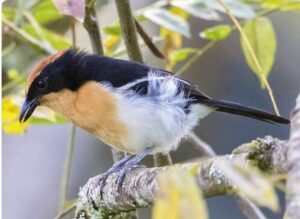
Rwenzori Double-collared Sunbird: Montane forest and heath zone
Stripe-breasted Tit: Higher elevation forests
Archer’s Ground Robin: Rare and elusive; bamboo zone
Other Albertine Rift Endemics:
Handsome Francolin: Montane forest and bamboo
Grauer’s Warbler: Bamboo zone (present)
Kivu Ground Thrush: Montane forest understory
High-Altitude Specials:
Scarlet-tufted Malachite Sunbird: Heath and moorland zones
Moorland Francolin: Alpine moorland (higher elevations)
Red-throated Alethe: Montane forest understory
Lower Slopes (Montane Forest):
The forested lower slopes (1,500-2,400 meters) offer the most accessible birding with good trails and reliable sightings of Rwenzori Turaco.
Viewing Tips:
Start early (7:00-8:00 AM) for most active birds
Watch for Rwenzori Turaco in fruiting trees
Listen for the distinctive turaco calls
Work with experienced guides who know territories
Combine with waterfall visits
Bamboo Zone (2,400-2,800 meters):
The bamboo zone is productive for species that specialize in this habitat, though it requires more effort to access.
Viewing Tips:
Requires longer hikes from lower elevations
Best visited during dry seasons
Grauer’s Warbler and Handsome Francolin targets
Combine with golden cat or other mammal tracking
Heath and Moorland Zones (Above 2,800 meters):
For serious mountain birders, the higher zones offer unique species not found at lower elevations.
Viewing Tips:
Requires multi-day trekking expeditions
Essential for Scarlet-tufted Malachite Sunbird
Moorland Francolin at highest elevations
Spectacular mountain scenery
Access Steps to Rwenzori Mountains National Park:
Fly to Entebbe International Airport (EBB) as your arrival point
Drive from Kampala to Kasese (approximately 6-7 hours via Mbarara or Fort Portal)
Take a domestic charter flight from Entebbe to Kasese airstrip
Enter the park through the Nyakalengija trailhead near Kasese
Arrange birding walks or multi-day treks through the Rwenzori Mountaineering Services office
Accommodation Options:
Rwenzori International Hotel (Kasese): Mid-range base
Equator Snow Lodge (Kasese): Luxury near the park
Margherita Hotel (Kasese): Budget-friendly in Kasese town
Trekkers’ Hostel (Nyakalengija): Basic accommodation at trailhead
Ruboni Community Camp: Community-run at park boundary
December to February (Long Dry Season):
This period offers the driest conditions with clearer trails and better visibility. This is the optimal period for birding, especially for higher elevations.
June to August (Short Dry Season):
Good conditions with slightly cooler temperatures. Lower elevation birding is excellent. Higher elevations may still have snow.
March to May and September to November (Rainy Seasons):
Birding is possible at lower elevations but trails become muddy. Higher elevations may be inaccessible. Fewer visitors offer exclusive experiences.
Best Time of Day:
Early morning (7:00-9:00 AM) for most active birds at all elevations.
What is the best location for Rwenzori Turaco?
The lower montane forest slopes (1,500-2,200 meters) offer the most reliable sightings. The main trail from Nyakalengija is productive.
Do I need a guide for Rwenzori birding?
Yes, a guide is required for all park activities, including birding walks. Guides know territories for Rwenzori specials.
Can I see Rwenzori Turaco without trekking to high elevations?
Yes, Rwenzori Turaco is found in lower montane forest (1,500-2,200 meters) and can be seen on day hikes from the park boundary.
How many days should I spend birding in the Rwenzoris?
For lower elevation birding focused on Rwenzori Turaco, one day is sufficient. For comprehensive coverage including bamboo and heath zones, 3-5 days of trekking is required.
What other wildlife can I see in the Rwenzoris?
The Rwenzoris are famous for their scenery, unique flora including giant lobelias and groundsels, and mammals including hyrax, duiker, and occasionally chimpanzees.
Rwenzori mountains bird watching offers a unique mountain birding experience focused on the legendary Rwenzori Turaco and other Albertine Rift endemics. The range’s dramatic scenery and distinct habitat zones—from montane forest to alpine moorland—create a remarkable setting for birding.
Whether you take a day hike for Rwenzori Turaco or undertake a multi-day trek for high-altitude specials, the Mountains of the Moon deliver unforgettable birding and spectacular mountain landscapes. Plan your visit during dry seasons, hire experienced guides, and prepare to discover the unique birds of this UNESCO World Heritage site.
No safaris available for this destination yet.