For serious birders and enthusiastic amateurs alike, a comprehensive Uganda bird species checklist serves as both a planning tool and a record of achievement. Uganda’s remarkable avian diversity—1,084 recorded species representing over 50% of Africa’s total bird species and nearly 11% of the world’s birds—makes this small East African nation a must-visit destination for any birder seeking to expand their life list. From the prehistoric Shoebill to jewel-like sunbirds and spectacular Albertine Rift endemics found nowhere else on Earth, Uganda delivers exceptional birding across a stunning variety of habitats. This guide provides a structured overview of Uganda’s bird species, organized by family, region, and conservation significance, helping you plan your birding strategy and track your sightings.
Overview of Uganda’s Avian Diversity
Uganda’s extraordinary bird diversity stems from its unique geographical position at the intersection of four African biomes: East African savannah, West African rainforest, the Albertine Rift mountains, and the semi-arid northeast. This convergence creates a remarkable range of habitats within a relatively small area, allowing birders to encounter species from multiple ecological zones in a single journey.
Key Statistics:
-
Total recorded species: 1,084
-
Albertine Rift endemics: 37 (24 regularly seen in Uganda)
-
Palearctic migrants: 200+ species
-
Threatened or endangered species: 30+
-
Endemic species (found only in Uganda): 1 (Fox’s Weaver)
The country’s protected area network—ten national parks, twelve wildlife reserves, and numerous community conservation areas—provides essential habitat protection for these species. The most bird-diverse parks include Queen Elizabeth (600+ species), Murchison Falls (450+ species), and Kibale (375 species), while Bwindi holds the highest concentration of Albertine Rift endemics.
Uganda Bird Species Checklist: Endemics and Specials
Any Uganda bird species checklist must highlight the country’s most sought-after species that attract birders from around the world.
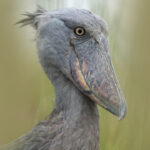
Shoebill (Balaeniceps rex)
Uganda offers the world’s most reliable Shoebill sightings, with Mabamba Swamp and Murchison Falls Delta providing success rates exceeding 95%. This prehistoric bird, standing up to 1.5 meters tall, is one of Africa’s most iconic and sought-after species. Best viewing months are December to February and June to August.
Albertine Rift Endemics (37 species)
The mountains of southwestern Uganda host 24 regularly seen Albertine Rift endemics, including:
African Green Broadbill: This bright green forest gem is one of Africa’s most beautiful and sought-after endemics. Found in Bwindi’s montane forests, particularly in the Buhoma and Ruhija sectors.
Rwenzori Turaco: With spectacular green, blue, and red plumage, this turaco is a highlight of Bwindi and Mgahinga birding. Often seen in small flocks in forest canopy.
Grauer’s Warbler: A bamboo zone specialist found in Bwindi’s Ruhija sector. Its distinctive song helps locate this elusive endemic.
Handsome Francolin: A forest floor dweller often seen on Bwindi trails, particularly in early morning.
Kivu Ground Thrush: Another Bwindi specialty, this thrush favors dense forest understory.
Other Albertine Rift Endemics: Include Rwenzori Batis, Rwenzori Apalis, Red-faced Woodland Warbler, and Dusky Crimsonwing.
Forest Bird Species
Uganda’s forests harbor some of Africa’s most spectacular and sought-after bird species. These forest specialists require specific habitat and often demand patient, guided birding.
Kibale Forest Specials:
-
Green-breasted Pitta: Africa’s most elusive and photogenic pitta species. Best viewed after rains when it emerges to feed on trails.
-
Great Blue Turaco: Africa’s largest turaco species, with stunning blue, red, and white plumage.
-
African Grey Parrot: Common in Kibale, often seen in noisy flocks at dawn and dusk.
-
Six Hornbill Species: Including the massive Ground Hornbill, Black-casqued Hornbill, and Piping Hornbill.
Bwindi Forest Specials:
-
Bar-tailed Trogon: Stunning red and black plumage; found in forest understory.
-
Yellow-eyed Black Flycatcher: An Albertine Rift endemic often seen along forest trails.
-
Shelley’s Crimsonwing: A rare and localized forest finch species.
-
Chapin’s Flycatcher: A critically endangered Albertine Rift endemic.
Semuliki Forest Specials:
-
Congo Basin species found nowhere else in Uganda, including Nkulengu Rail, Congo Serpent Eagle, and White-crested Hornbill.
Savannah and Wetland Bird Species
Uganda’s savannah parks and extensive wetlands host abundant birdlife that is both spectacular and accessible.
Murchison Falls National Park:
-
Abyssinian Ground Hornbill: Africa’s largest hornbill species, often seen in small groups on the northern bank.
-
Secretary Bird: A striking raptor that hunts on foot across grasslands.
-
Denham’s Bustard: A large, elegant bustard of open savannah.
-
Goliath Heron: The world’s largest heron, common along the Nile.
-
Saddle-billed Stork: A spectacular, large stork with distinctive red and yellow bill.
Queen Elizabeth National Park:
-
African Skimmer: Spectacular waterbird that skims the water surface with its lower mandible.
-
Pink-backed Pelican and Great White Pelican: Large breeding colonies along the Kazinga Channel.
-
Malachite Kingfisher: A jewel of Uganda’s waterways, brilliant blue and orange.
-
African Fish Eagle: Uganda’s national bird, common along all major waterways.
Mabamba Swamp and Lake Victoria Wetlands:
-
Shoebill: The premier attraction, reliably seen in this papyrus wetland.
-
Papyrus Gonolek: A striking red and black wetland specialist.
-
Blue Swallow: A rare migratory swallow species found in papyrus swamps.
-
White-winged Warbler: Another papyrus specialist.
Raptors and Migratory Birds
Uganda hosts an impressive diversity of raptors, both resident and migratory.
Resident Raptors:
-
Martial Eagle: Africa’s largest eagle, found in savannah parks.
-
Verreaux’s Eagle: A specialist of rocky habitats, feeding on hyraxes.
-
African Crowned Eagle: A powerful forest eagle; found in Kibale and Bwindi.
-
Bateleur: A striking, colorful eagle of savannah and woodland.
Palearctic Migrants (November to April):
-
Steppe Eagle: Common winter visitor to savannah areas.
-
European Bee-eater: Spectacular flocks arrive November through March.
-
Carmine Bee-eater: Bright pink and blue; seen in large colonies along rivers.
-
Eurasian Hobby: An elegant falcon species.
-
Willow Warbler: Common winter visitor, often heard before seen.
Uganda Bird Species Checklist by Family
This organized checklist helps you track species by family for easier identification and recording.
Kingfishers (12 species):
Giant Kingfisher, Malachite Kingfisher, African Pygmy Kingfisher, Woodland Kingfisher, Striped Kingfisher, Pied Kingfisher, Grey-headed Kingfisher, Half-collared Kingfisher, Chocolate-backed Kingfisher, Blue-breasted Kingfisher, Shining-blue Kingfisher, African Dwarf Kingfisher
Turacos (6 species):
Great Blue Turaco, Rwenzori Turaco, Black-billed Turaco, Ross’s Turaco, White-crested Turaco, Bare-faced Go-away-bird
Hornbills (9 species):
Abyssinian Ground Hornbill, Southern Ground Hornbill, Black-casqued Hornbill, Piping Hornbill, African Grey Hornbill, Crowned Hornbill, Pale-billed Hornbill, Red-billed Hornbill, Jackson’s Hornbill
Sunbirds (50+ species):
Uganda’s sunbird diversity is extraordinary. Key species include Regal Sunbird, Rwenzori Double-collared Sunbird, Northern Double-collared Sunbird, Bronze Sunbird, Green-headed Sunbird, and Scarlet-chested Sunbird.
Weavers and Widowbirds (40+ species):
Fox’s Weaver (Uganda endemic), Black-headed Weaver, Village Weaver, Spectacled Weaver, Brown-capped Weaver, and numerous widowbird species including Fan-tailed Widowbird and Marsh Widowbird.
Conservation Status and Threatened Species
Several bird species in Uganda face conservation challenges. Understanding their status informs responsible birding practices.
Critically Endangered:
-
Grauer’s Warbler: Albertine Rift endemic, threatened by habitat loss
Endangered:
-
Chapin’s Flycatcher: Bwindi and other Albertine Rift forests
-
Rwenzori Turaco: Forest loss threatens this spectacular endemic
Vulnerable:
-
Shoebill: Wetland degradation and disturbance threaten this iconic species
-
African Green Broadbill: Bwindi population vulnerable to habitat fragmentation
-
Great Blue Turaco: Hunting pressure in some areas
Near Threatened:
-
Green-breasted Pitta: Forest loss affects Kibale and other populations
-
Papyrus Gonolek: Wetland conversion threatens papyrus specialists
Seasonal Variations in Species Presence
Understanding seasonal patterns helps maximize your species count.
Resident Species (Year-round): Approximately 800 species remain in Uganda throughout the year, providing consistent birding opportunities.
Palearctic Migrants (November-April): Over 200 species arrive from Europe and Asia during this period, significantly increasing bird counts. Peak migration occurs in November-December for arrivals and March-April for departures.
Intra-African Migrants (Seasonal Movements): Some species move within Africa based on rainfall patterns. These include various weaver species, bee-eaters, and rollers.
Breeding Seasons: Most resident birds breed during the dry seasons (December-February and June-August), displaying breeding plumage and active behaviors ideal for observation and photography.
Frequently Asked Questions
What is the total number of bird species recorded in Uganda?
Uganda has recorded 1,084 bird species as of 2024, representing over 50% of Africa’s total bird species. New species continue to be recorded periodically.
How many Albertine Rift endemics can I see in Uganda?
Uganda hosts 24 regularly seen Albertine Rift endemics, with the highest concentrations in Bwindi Impenetrable Forest and Mgahinga Gorilla National Park.
What is the best season for maximum species count?
November to March offers the highest species counts, with over 200 Palearctic migrants supplementing resident species. December to February provides the best combination of dry conditions and migrant presence.
Is there a single endemic bird species found only in Uganda?
Fox’s Weaver (Ploceus spekeoides) is considered Uganda’s only true endemic, though several Albertine Rift endemics are nearly restricted to Ugandan territory.
How many bird species can I expect to see on a 10-day tour?
A well-planned 10-day tour with experienced guides typically yields 350-450 species. A 14-day tour covering diverse habitats can reach 500+ species.
Conclusion
A comprehensive Uganda bird species checklist reveals the extraordinary avian wealth of this small East African nation. With over 1,080 species including 37 Albertine Rift endemics, the prehistoric Shoebill, and spectacular forest specials like Green-breasted Pitta, Uganda delivers unparalleled birding diversity. Whether you are pursuing a life list that approaches 500 species in a single visit or simply seeking to experience Africa’s most spectacular birds in their natural habitats, Uganda’s protected areas and expert guiding community provide the framework for unforgettable birding. Use this checklist to plan your target species, track your sightings, and deepen your appreciation for one of Africa’s premier birding destinations.